
Designing a national systems change initiative in India
Finding “Common Ground” for improved livelihoods, climate action, and social equity
Overview
The degradation of India’s Commons has devastating effects for communities, ecosystems, and the country’s economy. Landscapes are increasingly vulnerable to natural disasters, while people depending on the Commons are further exposed to financial shocks, reversing gains in social and economic inclusion.
To address this triple crisis of livelihoods, climate, and social equity, in 2022, CoRe joined a group of committed, strategic changemakers in India’s environmental sectors to conceptualize and co-design a collaborative governance initiative for systems change around the Commons. The result of this effort, Common Ground, is a national initiative that uses a collaborative action framework to convene civil society, government, and the private sector around systems change for inclusive natural resource governance and resilient rural livelihoods. Today, this platform for ecosystem entrepreneurship is anchored by Living Landscapes, a fit-for-purpose backbone organization that serves as the initiative’s convenor and secretariat.
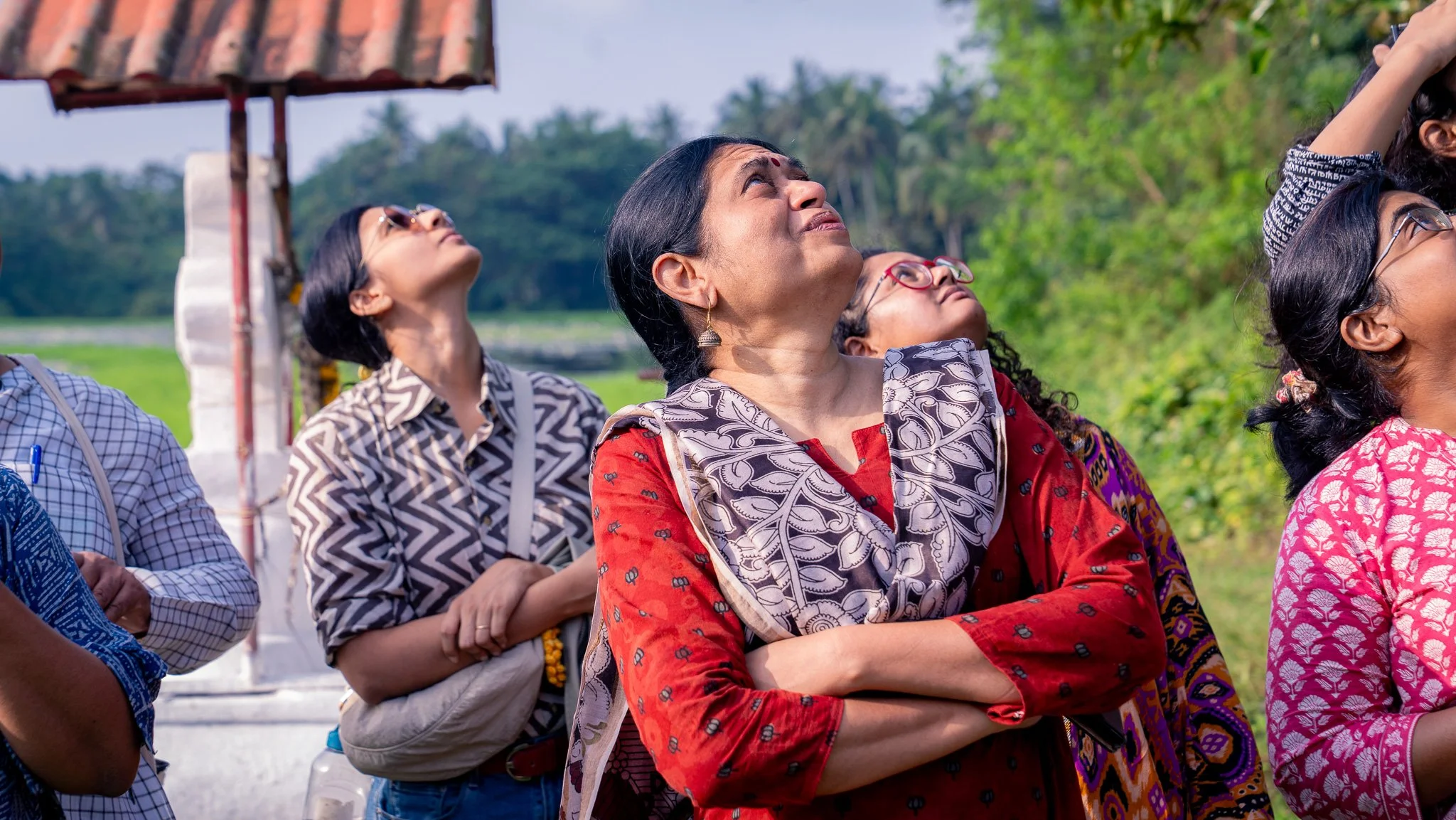
Participants during a visiting session as part of a 2025 Common Ground collaborative workshop in Goa, India.
CoRe has partnered in each stage of building out the initiative, from an exploratory phase in 2022 through the consolidation of Common Ground as a fully operating collaborative action platform today. As part of a design team comprising representatives from multiple organizations, our central contributions include co-conception and facilitation of the design process for the initiative, co-creation of the initiative’s theory of change and strategy, as well as devising and supporting a corresponding learning, monitoring, and evaluation (LME) framework. To date, Common Ground has convened 58 collaborating partners and raised close to USD $10 million in funding from domestic and international sources.
As a long-term partner within the Common Ground network, we support its key objectives for rural communities across India: healthy Commons rooted in inclusive governance; equitable, durable livelihood gains; and community resilience.
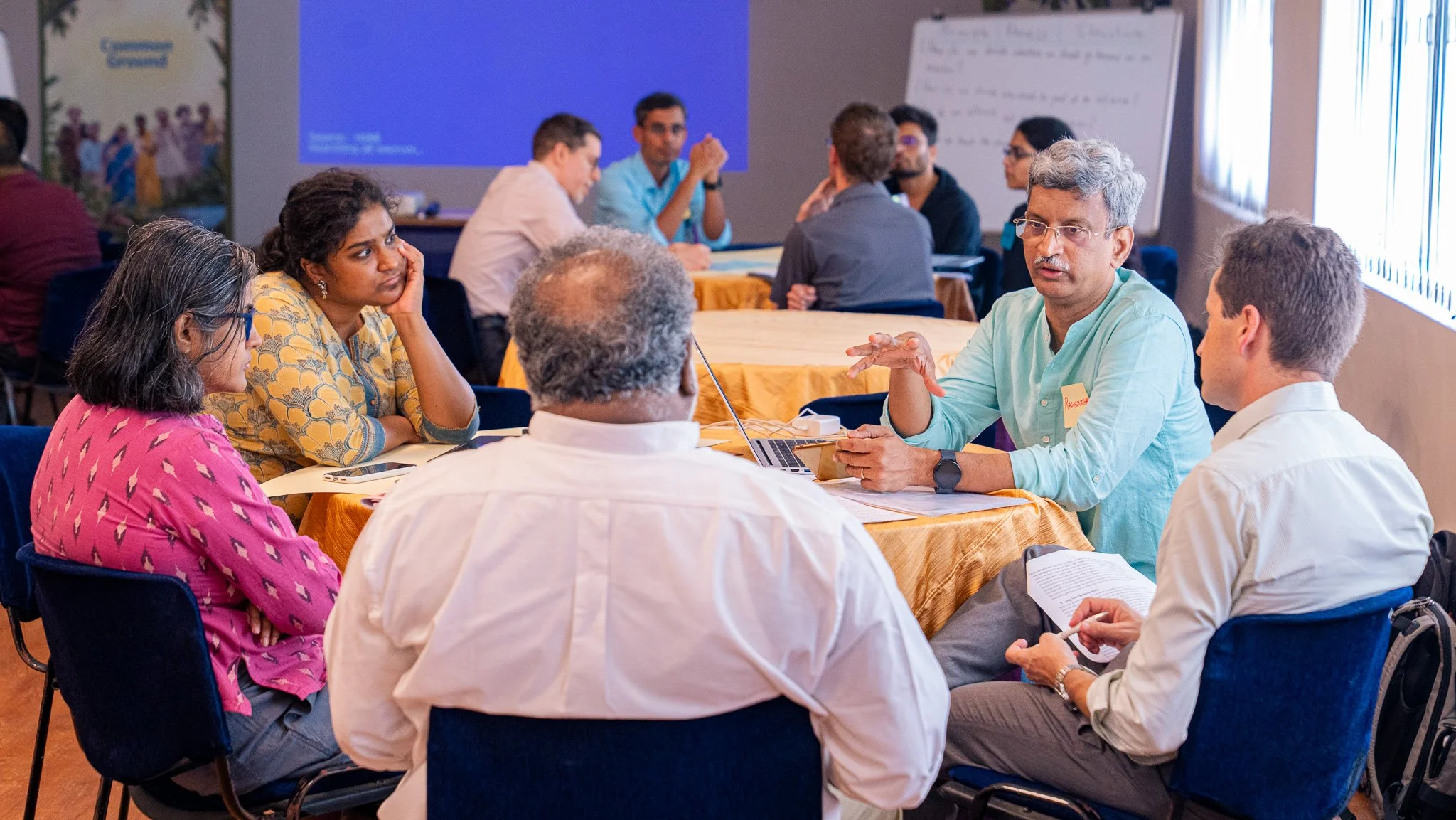
Participants debate during a 2025 Common Ground collaborative workshop in Goa, India.
“As the range of macro-drivers fast outpace local communities’ ability to respond, it is critical that we find ‘common ground’ to address differing mental models, foster a plurality of solutions and approaches, translate innovative thinking into practice, and co-create responsive social infrastructure with communities to catalyze change at an unprecedented pace and scale. ”
The insidious impacts of ecosystem degradation
Degradation of the ecological Commons severely impacts communities. 350 million people in rural India who depend on the Commons experience greater precarity and are less able to withstand external shocks as a result. For example, important ecosystems such as community forests, pastures, and water bodies have a reduced capacity to tolerate and recover from extreme weather events.
In addition to their role in preserving biodiversity, sequestering carbon, and performing other key ecological functions, the Commons are critical to the Indian economy. The value of ecosystem services related to the Commons in India is estimated at 3.6% of the GDP, or US$90.5 billion annually (INR 7.5 lakh crore). [1] Yet, as of 2024, the Commons in India are degrading at about 4% per year. [2]
Exacerbating this crisis are systemic inequalities. Historically, environmental governance structures have not been able to fully address the concerns of marginalized groups or promote their leadership, especially for women, scheduled castes, and tribal peoples. These groups also have a significant dependence on the Commons, given traditional patterns of resource use and land tenure.
The consequences of natural resource degradation also extend to areas such as education and income generation. Women, in particular, face even fewer chances for employment and study when they are forced to work harder to access dwindling natural resources. [3]
Laying the groundwork for collaboration
Amid these acute impacts, CoRe, as part of its role in the Common Ground design team, co-conceived and facilitated a 2022 process for the initiative's early partners to analyze systems governing India's Commons. This supported the network of partners to examine critical barriers to Common Ground's central vision — healthy Commons rooted in inclusive governance. Further, it helped them to define strategic priorities to bring this vision to life.
Above all, we observed together that dispersed and uncoordinated efforts — whether local, regional or national — severely limited the capacity of key actors to achieve effective grassroots mobilization, policy influence, knowledge exchange, and integrated programming that can generate multidimensional impacts.
Partners assessed that while there were numerous actors working across the ecosystem and large-scale investments in natural resources, climate action, and livelihood improvement, a disjointed approach was a critical barrier to meaningful systems change. This analysis identified a strong need for an initiative to connect the diverse sets of actors operating across themes and sectors related to rural development and the environment, driving them to accelerate and complement each other's efforts.
“We play the unique role of convener, connector, and catalyst.”
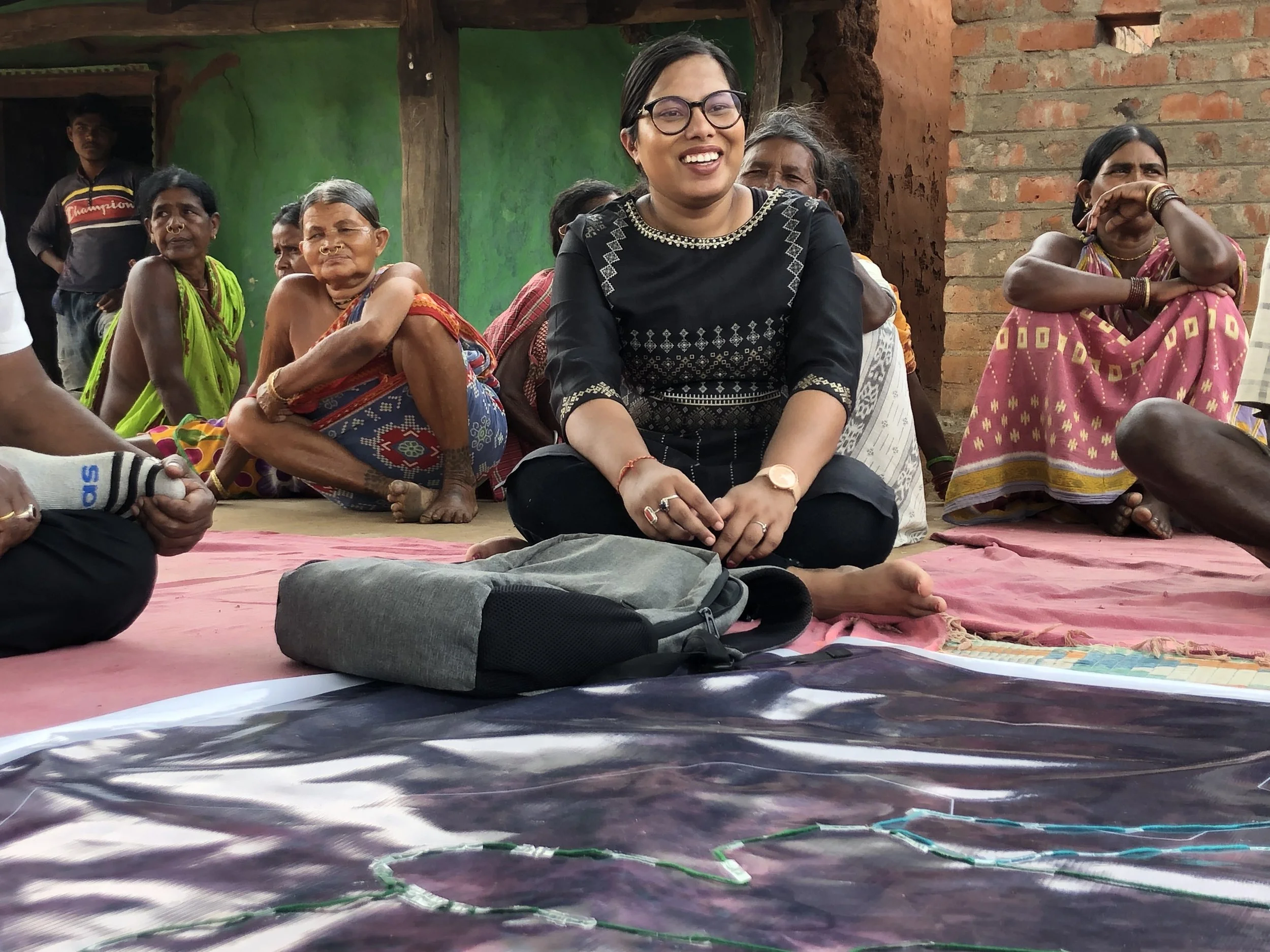
Participants share ideas during a Common Ground workshop in Odisha, India in 2024.
From analysis to action
In response, CoRe helped Common Ground's early partners to conduct a formal systems change analysis focused on this shared purpose. In 2022, we worked to:
Co-design a collaborative model for systems change that includes civil society, communities, governments, and private sector actors
Co-create an organizational and governance structure for Common Ground, including the structure of the initiative's anchor organization, Living Landscapes
Identify common outcomes and targets that diverse actors could coalesce around
Identify key institutional gaps and barriers, and corresponding pathways to meaningful change within and across multiple sectors
Consult with practitioners, academics, think tanks, technology innovators, policy advisors, and ecosystem orchestrators to consolidate insights on priority work areas and strategy
In the months following the systems change analysis (2023), CoRe helped to operationalize this collaborative model for systems change by supporting partners to:
Formally establish Common Ground as an initiative supported by the newly created organization, Living Landscapes
Develop a funding strategy based on a collaboratively written Investment Prospectus that raised $10 million in initial funding over the course of just 18 months
Solidify more than 25 written commitments from diverse partners who joined the initiative and signed a joint Statement of Commitment
Co-design a learning, monitoring, and evaluation framework and system to enable joint learning and assess partnership impact across a theory of change for systems transformation in both the short- and long-term
Building on this momentum, CoRe's support to the initiative today centers on:
Enabling multistakeholder dialogue processes at multiple scales, notably to support landscape partnerships and state program implementation
Measuring and evaluating change and progress along pathways to develop evidence and guide strategic planning
Narrative building for systems transformation, linking community-led perspectives and expertise to national and international policy dialogue
Mapping pathways towards systems change
Within CoRe’s theory of change, this partnership illustrates the progress that CoRe helped realize in strengthening capacity for multi-stakeholder collaboration by:
Co-creating a new platform for collaborative action
Supporting this platform in developing institutional and implementation capacities
Co-designing a collective path to systems change
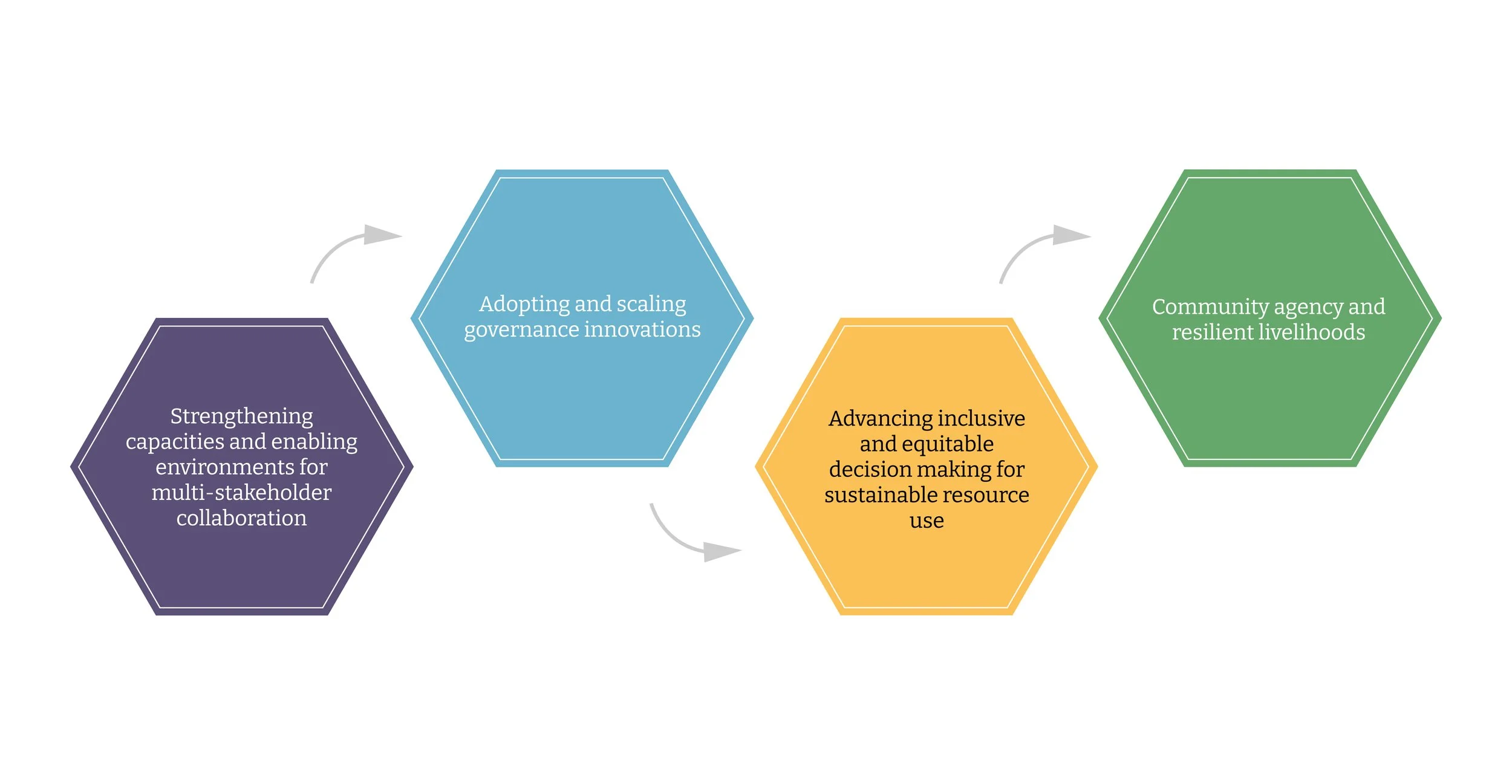
CoRe’s Theory of Change
Common Ground proposes a new approach to the Commons that is predicated on collective action across actors, domains and scales. In this way, it champions the implementation of governance innovations for wide-reaching impact, including mechanisms to generate and access data for landscape conservation planning, make local planning bodies more effective, and review and solve policy implementation challenges.
Our support to Common Ground enables pathways towards concrete system shifts that facilitate:
Elevating the role of Commons and commoning within rural development and environmental governance, centering women's agency
Aligning policy and programmatic directions and financial flows to support ecologically sound, inclusive rural development
Increasing incentives and market opportunities that favor resilient, gender-equitable rural livelihoods
Growing responsive social infrastructure supporting alignment across sectors working on rural development and the environment
In turn, each of these pathways strengthens action in local landscapes to secure community rights and regenerate degraded ecosystems, leading to improved social, ecological, and economic outcomes that, over a five-year period, target 22 million acres of Commons and 75 million people, including 37 million women.
Contributing to the SDGs
Our support to Common Ground has focused on key areas for impact within the Sustainable Development Goals framework, including:
Innovative collaboration as well as strengthened local institutions, national networks, and inclusive environmental governance practices
Peace, Justice, and Strong Institutions (SDG 16) and Partnerships for the Goals (SDG 17)
Ecological restoration of natural resources on land and in waterbodies critical to agriculture, climate resilience and household well-being
Clean Water and Sanitation (SDG 6), Climate Action (SDG 13) and Life on Land (SDG 15)
Economic empowerment through community-centric income generation
No Poverty (SDG 1)
Gender-sensitive approaches to environmental governance and the promotion of women's leadership in the stewardship of the Commons
Gender Equality (SDG 5)
Social, economic, and political inclusion, with particular focus on scheduled castes and tribes
Reduced Inequality (SDG 10)
What’s Next
CoRe's support to Common Ground continues. This includes:
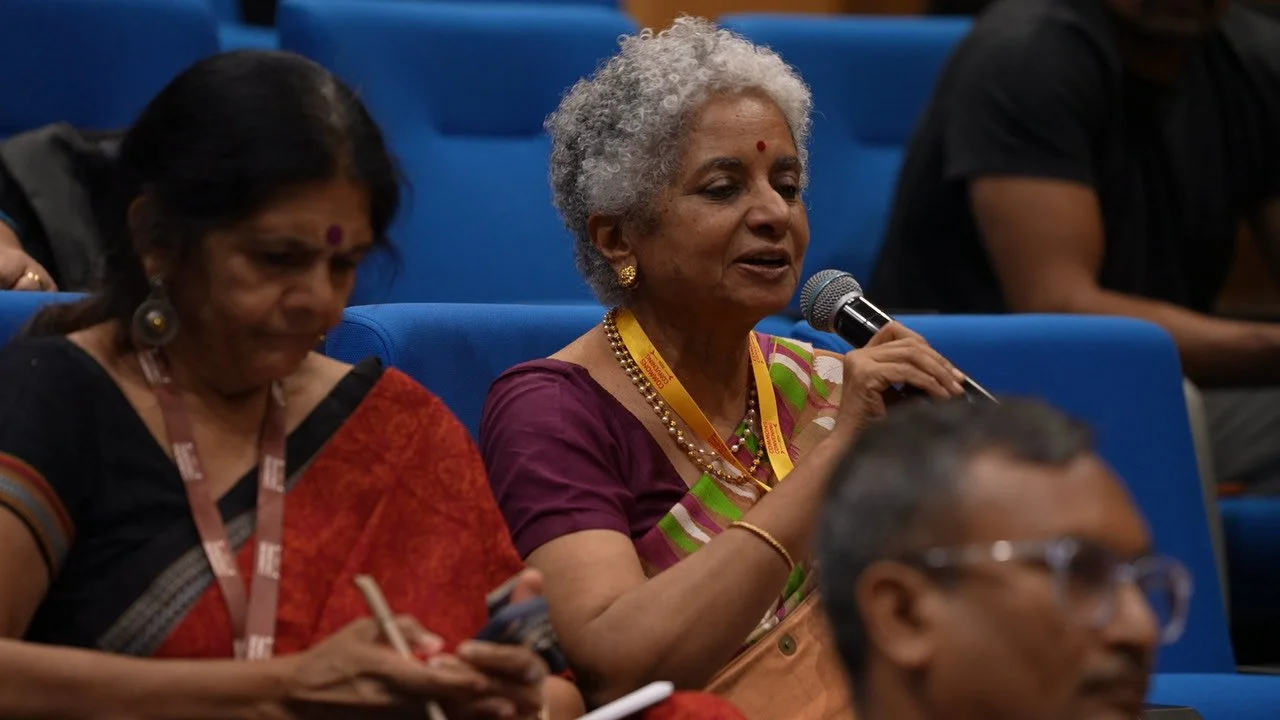
Attendees pose questions and share insights at the 2024 Commons Convening.
Raising the profile of the Commons in policy dialogue. For example, in 2024, CoRe was a design partner in structuring the first Commons Convening in Delhi, working alongside Common Ground partners such as Living Landscapes, the Foundation for Ecological Security, UNDP, TISS Mumbai, and LandStack. More than 500 attendees discussed ambitions, strategies, and action pathways towards healthy Commons and resilient rural livelihoods.
Scaling the multi-actor platform approach. In 2025, 20 partner organizations across the Indian states of Jharkhand and Odisha convened to roll out a proven approach to accelerate landscape partnerships, which CoRe has worked to systematize through practitioner guidance, outcome evidence and learning tools. The approach brings together a diverse range of strategic actors to address the health and functioning of landscapes, centering community voice and agency.
Innovating learning and evaluation practices. An initiative of this scale and diversity requires carefully tuned processes to assess collective contributions to systems change outcomes, and trace how these in turn translate into gains in community resilience, household income, and women's empowerment. CoRe is advising on the implementation of systems to build this evidence and to deliberate among dozens of partners on strategic choices as the initiative matures.
_____
Footnotes:
Harpinder Sandhu et al., "Valuing Ecosystem Services Provided by Land Commons in India: Implications for Research and Policy," Environmental Research Letters 18, no. 1 (2023): 013001, https://fes.org.in/resources/studies-&-reports/journal-articles-&-research-papers/Valuing-ecosystem-services-provided-by-land-commons-in-India.pdf.
Living Landscapes, Common Ground Investment Prospectus, 2023, Executive Summary.
Living Landscapes, Common Ground Investment Prospectus, 2023, 3.